Mary Virginia McCormick | |
|---|---|
 Photograph of Mary V. McCormick, 1901 | |
| Born | Mary Virginia McCormick May 5, 1861 Chicago, Illinois, U.S. |
| Died | May 24, 1941 (aged 80) Los Angeles, California, U.S. |
| Resting place | Graceland Cemetery, Chicago |
| Parent(s) | Cyrus Hall McCormick Nancy Fowler McCormick |
| Relatives | See McCormick family |
Mary Virginia McCormick (May 5, 1861 – May 24, 1941) was a wealthy American philanthropist[1] who donated to humanitarian causes in the United States and Canada in the early twentieth century. She was a member of the McCormick family who had schizophrenia[2] and a reclusive lifestyle.[3][4]
Biography
Childhood and adolescence
Born in Chicago, Illinois[5] on May 5, 1861,[5][6] Mary Virginia McCormick was the eldest daughter[7] of Nancy Maria "Nettie" Fowler McCormick and Cyrus Hall McCormick,[8] the American inventor of the mechanical reaper[9][10] and industrialist[11][12] who founded the McCormick Harvesting Machine Company in 1847.[13][14] She was the couple's second child,[6][8][15] born two years after her brother, Cyrus McCormick Jr.[6][16]

In July 1862, she sailed with her family across the Atlantic aboard the SS Scotia to Liverpool, England,[17][18] and lived with her mother in London[19][20] while her father toured the United Kingdom, France and Germany to exhibit his farming invention.[20] When the McCormicks returned to the United States in 1864,[21][22] by mid-November[23][24] they occupied a second-floor suite at the Fifth Avenue Hotel[25] in New York City.[5][26]
While staying at the hotel, Mary McCormick and her older brother were infected with scarlet fever that winter,[5][25] an illness that took the life of her younger brother, Robert Fowler McCormick,[5][25] on January 6, 1865.[5][6] At the age of five, she lived at 40 Fifth Avenue[27] in Lower Manhattan after her father purchased the residential property for the family[5][28] in November 1866.[5]
The McCormicks settled in Chicago after the Great Chicago Fire in October 1871,[29][30][31] residing at 62 North Sheldon Street until the spring of 1875[32][33] and then moving to a house on 363 Superior Street.[32][33] Although Mary McCormick was educated by private tutors[34][35] and stayed at private boarding schools away from home,[36] she attended Central High School, a Chicago public school on Monroe Street.[7] In her early teenage years, she displayed musical talent and became a skilled pianist.[15][37]
When the McCormicks visited Europe in the summer of 1878,[38][39] the family addressed her thereafter by her middle name, Virginia.[40] In August,[41] she vacationed with her mother at St. Moritz,[40] a Swiss town near the Albula Alps, while her father featured the reaper at the World's Fair in Paris.[39][42] The pair then rejoined the family at the French capital in October[43][44] and stayed at the Hôtel du Jardin,[44][45] across from the Tuileries Garden.[44] Mary McCormick remained with her parents and younger siblings in Paris until mid-April 1879[46][47] to care for her father[48] as he recovered from a malignant carbuncle on the back of his neck.[49][50] During her stay, she visited museums, historic places, the French opera, performances by stage actress Sarah Bernhardt and a mass at Notre-Dame Cathedral with church music led by composer Charles Gounod.[47]
The family returned to the United States in the summer of 1879.[51] When the McCormicks moved into their new Chicago mansion on Rush Street in late November, she was at a boarding school in New York.[52]
Mental illness

Mary McCormick exhibited signs of anxiety that worsened throughout her teenage years.[15][37] By the age of 18, she expressed delusional ideas and hallucinated.[15] She had frequent bouts of weeping and frantic praying.[15][37] Episodes of insomnia[37] were marked with incidents of her climbing out of windows[15] and wandering around at night.[15]
At the age of 19,[2][53][54] she was diagnosed by doctors with dementia praecox.[37][55] Due to her medical diagnosis, doctors declared her as insane[54][56] and mentally incompetent[57][58] in 1880.[58] Her condition became worse after the death of her father[59] on May 13, 1884.[60][61][62] The following August,[63] she stayed at Clayton Lodge, the McCormick family estate in Richfield Springs, New York,[64] and after Christmas,[65] her mother brought her to Philadelphia, Pennsylvania to seek treatment under the care of Dr. Silas Weir Mitchell, a neurologist.[66]
By 1889,[67] she occupied a camp in the Adirondack Mountains[67][68] of upstate New York and a house in the Upper West Side of Manhattan near the Hudson River,[67][68] two dwellings that were provided by her mother[67][68] who had employed a resident physician[67][68] and household attendants to care for her.[68] Grace Thorne Walker, a Canadian-born[69][70] business secretary for the McCormick family,[69] was the head of Mary McCormick's household[71] and served as her nursing companion.[72][73] Cyrus McCormick Jr. negotiated a three-year contract to recruit Dr. Alice Bennett,[71][74] a superintendent at the Norristown State Hospital for the Insane,[71] as Mary McCormick's attending physician in 1896[71][74] but Bennett resigned two years later[71][74] after resident nurses had accused the doctor of morphine addiction.[74]
Mid-life in the United States and Canada
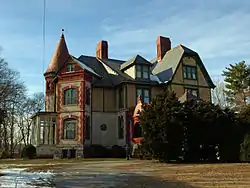
In 1897,[2][15][75] Mary McCormick moved to the family estate at Riven Rock in Montecito, California[76][77] and lived there until 1904.[78] She stayed in Asheville, North Carolina[79] in the summer of 1898,[80] which became her winter residence.[81]
The Kildare manor near Oakwood Avenue in Huntsville, Alabama, then became her winter home[73][81][82] after her mother purchased the property from industrialist Michael Joseph O'Shaughnessy in 1900.[1][72] She kept a small herd of deer on the estate[83] and maintained a dairy that provided free milk to underprivileged children in Huntsville.[82] On May 5 of each year, an outdoor festival was held on the grounds of her manor for hundreds of invited schoolchildren to celebrate her birthday.[82][84]

Mary McCormick visited Canada in 1904[85][86] and remained in Toronto for months.[86] She noticed the Oaklands manor on Avenue Road during her stay[85][86] and her family bought the property from the family of Senator John Macdonald[87] in November 1905[85][86][88] as a summer residence[88] for her.[86] By 1908, she occupied the estate[89] where her home held indoor gatherings for the Young Women's Christian Association (YWCA),[90][91][92][93] the Woman's Christian Temperance Union (WCTU)[94] and the Women's Christian Medical College.[95][96] The grounds of her manor held outdoor garden parties every June that raised funds for the benefit of the Girl Guides of Canada,[97][98] the Toronto General Hospital[99][100] and the Home and School Association of Brown Public School on Avenue Road.[101][102][103][104][105] In June 1916, her estate had the largest fête ever held in Canada,[106][107][108] a four-day festival[106][107][108] that was opened by Ontario Premier William Hearst[109][110] for the Canadian Red Cross Society[107][108] at the mid-point of the First World War.
She visited Cohasset, Massachusetts, in 1910 and leased the Caravels manor on Nichols Road.[111] Fond of music herself,[69][82][111] she accommodated musicians from the Boston Symphony Orchestra during her stay at the manor that year.[111] Her family then acquired the property from industrialist Albert Cameron Burrage the following year[111] as her seaside residence.[112] The Caravels manor served as a layover during her travels between Huntsville and Toronto[113] as the McCormicks made annual family visits to Cohasset at the end of June.[114]
Later life in California and death
After the death of her mother on July 5, 1923,[115][116] Mary McCormick moved back to California in 1924.[3][4][117][118] The property at 1400 Hillcrest Avenue in Pasadena[119][120] was purchased by the McCormicks from the family of oil magnate Frank Whitney Emery[119] as her primary residence.[121] She was placed under the care of Dr. Adolf Meyer,[122][123] a psychiatrist who was retained in 1927 for five years by her younger sister, Anita McCormick Blaine.[122]
In 1928, the McCormick family acquired a cliffside property in Los Angeles on Alma Real Drive in the Huntington Palisades community near Santa Monica that became her summer home[121] known as the Quelindo manor.[3][4][82][124] Her estate in Toronto was sold to the Brothers of the Christian Schools in 1931 for the purpose of establishing a campus for De La Salle College[125][126] and her manor in Huntsville was sold at auction in 1932 and became a hotel that year.[127]
She hired symphony orchestras to play for her[3][4][119][121] and kept three musicians among her retinue of 30 household servants[3][82][119] as she divided her time between the two California estates.[119] In May 1938, she was ill at the Quelindo manor[128] and unable to attend the wedding of her younger brother, Harold Fowler McCormick, to his nurse, Adah Wilson, that was held at her other home in Pasadena.[128][129]
Bedridden[82] by an illness in her final three months,[4][82] Mary McCormick died at the Quelindo manor on May 24, 1941, at the age of 80.[3][4][82][124][130] Her belongings in California were sold at auction[119][121] and her net worth, after all inheritance taxes and expenses had been deducted, was US$6,550,802 in 1942.[71][130] She was buried with other members of the McCormick family at Graceland Cemetery in Chicago.
Philanthropy
Mary McCormick was endowed with a trust fund[1] that afforded her with the means to support social activities and charitable causes.[1][82] In 1904,[131][132][133] she provided the first settlement house in Huntsville[132] with the opening of Virginia Hall,[82][131][132][134] a fifteen-room community center[132][133] situated in West Huntsville.[131][133][134][135] In Toronto, her donation to the YWCA allowed the charity to open the YWCA Cafeteria in August 1910,[136] a downtown restaurant at 209 Yonge Street[136][137] that offered affordable meals for women.[136]
She pledged a donation to the Toronto Playgrounds Association in 1910 for the purpose of equipping a children's playground in the city.[138][139][140][141] Cottingham Square, a public square[138] near her Toronto home,[139] was the original location for the playground[142][143] but it was too close in proximity to the Canadian Pacific Railway line.[143] The land of the former Grand National Rink on Brock Avenue was purchased by the city of Toronto in December 1910[144][145] which then became the site for the McCormick Playground in July 1911.[146] Her mother and Toronto Mayor George Reginald Geary opened the McCormick Recreation Centre in September 1912[147][148] on the site of the playground at 163 Brock Avenue,[149] a venue where Mary McCormick held annual Christmas parties for 400 children and their parents.[150][151][152] The total of her contribution to the Toronto Playgrounds Association was CA$25,000.[153][154]
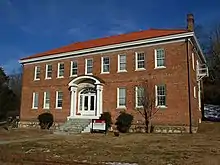
During the Jim Crow era of racial segregation in the Southern United States, Mary McCormick funded the construction of a hospital in 1911 at the Alabama State Agricultural and Mechanical College, a black college in Normal, Alabama.[155][156] The Virginia McCormick Hospital cost US$10,000 to build[155] and it was the only hospital for African Americans in Madison County when it opened.[157] She also contributed US$19,000 in the same year to erect the Councill Domestic Sciences Building on the campus,[155] named after the college's founder William Hooper Councill,[157][158] an educator who was a former slave.[158] In February 1916,[159][160] she donated US$5,000 to open a black hospital annex of the Huntsville Infirmary,[159][160][161] an eight-room building[159] that was furnished by her household servants[162] and located across the street in downtown Huntsville from the segregated white hospital.[159][161][162]
She gave US$17,500 to the Young Men's Christian Association (YMCA) of Huntsville.[163][164] Her aid allowed the Central YMCA to open on Greene Street[164][165] in February 1912[163][164] and the West Huntsville YMCA[82][164] to open on Eighth Avenue[166] in 1915.[166][167] She contributed US$3,000[168] in 1916[169] to erect the West Huntsville School, an eight-room wooden schoolhouse[168][169] on Ninth Street.[168]
Mary McCormick supported the Canadian war effort during the First World War by sending CA$1,500 to the Canadian Red Cross Society,[170] CA$5,000 to the YMCA Red Triangle Fund[171] and 200 pairs of socks to the Ontario Red Cross Sock Fund.[172]
Legacy
Landmarks with her namesake include the following:
- Mary McCormick Recreation Centre at 66 Sheridan Avenue in Toronto, a municipal recreation facility that replaced the McCormick Recreation Centre at 163 Brock Avenue in 1964[173][174] and named originally as the McCormick Recreation Centre[175] until 2001.[176]
.jpg.webp)
- McCormick Park in Toronto, a municipal park in Brockton Village that was named originally as the McCormick Playground in 1911[146] until 1963.[177]
- McCormick Playground Arena at 179 Brock Avenue in Toronto, a municipal indoor ice arena that opened in 1972.[178]
- Virginia Hall[180] at 60 Shiloh Road at Tusculum University in Greeneville, Tennessee,[181] opened in 1901[182] as the first dormitory for women at the college.[183]
- Virginia Library[184] at 826 Belden Avenue in Chicago,[185] an academic library at the McCormick Theological Seminary from 1896 to 1963.[186]
- Virginia McCormick Hall at 308 Buchanan Way at Alabama A&M University in Normal, Alabama, first opened as the Virginia McCormick Hospital from 1911 to 1927.[157]
Print sources
- Casson, Herbert N. (1909). Cyrus Hall McCormick: His Life and Work. Chicago: A.C. McClurg & Company.
- Ellis, Diane; Drost, Maureen (Summer–Fall 2002). "Mr. O'Shaughnessy's Dream House" (PDF). Historic Huntsville Quarterly. 28 (2 & 3): 13–22.
- Fields, Armond (2003). Katharine Dexter McCormick: Pioneer For Women's Rights. Westport, Connecticut: Praeger Publishers. ISBN 978-0275980047.
- Hutchison, William T. (1935). Cyrus Hall McCormick: Harvest, 1856–1884. Vol. 2. New York City: D. Appleton-Century Company.
- Noll, Richard (1999). "Styles of Psychiatric Practice, 1906–1925: Clinical Evaluations of the Same Patient by James Jackson Putnam, Adolph Meyer, August Hoch, Emil Kraepelin and Smith Ely Jelliffe". History of Psychiatry. 10 (38 Pt 2): 145–189. doi:10.1177/0957154X9901003801. PMID 11623876. S2CID 34823163.
- Pruitt, Raneé G., ed. (2005). Eden of the South: A Chronology of Huntsville, Alabama, 1805–2005 (PDF). Huntsville: Huntsville-Madison County Public Library. ISBN 0-9707368-2-7.
- Record, James (1978). A Dream Come True: The Story of Madison County and Incidentally of Alabama and the United States (PDF). Vol. 2. Huntsville, Alabama: John Hicklin Printing Company.
- Roderick, Stella Virginia (1956). Nettie Fowler McCormick. Rindge, New Hampshire: Richard R. Smith Publisher, Inc.
- Rosenberg, Chaim M. (2019). The International Harvester Company: A History of the Founding Families and Their Machines. Jefferson, North Carolina: McFarland and Company. ISBN 978-1476677095.
References
- 1 2 3 4 Ellis & Drost 2002, p. 13.
- 1 2 3 Kleiman, Miriam (Summer 2007). "Rich, Famous, and Questionably Sane: When a Wealthy Heir's Family Sought Help From a Hospital For the Insane". Prologue. 39 (2): 41.
- 1 2 3 4 5 6 "Recluse Who Hired Orchestras; Wealthy Spinster Dies at 80". Toronto Daily Star. May 26, 1941. p. 21.
- 1 2 3 4 5 6 "Mary V. McCormick, 80, Mystery Woman, Dies". Wilmington Journal-Every Evening. Santa Monica, California. AP. May 26, 1941. p. 4. Retrieved March 29, 2023 – via Newspapers.com.
- 1 2 3 4 5 6 7 8 Hutchison 1935, p. 128.
- 1 2 3 4 McCormick, Leander James (1896). Family Record and Biography. Chicago: L.J. McCormick. p. 304.
- 1 2 Roderick 1956, p. 116.
- 1 2 Roderick 1956, p. 73.
- ↑ Hutchison 1935, p. 360.
- ↑ Casson 1909, p. 44.
- ↑ Hutchison 1935, p. 361.
- ↑ Casson 1909, p. 53.
- ↑ Roderick 1956, p. 44.
- ↑ Casson 1909, p. 137.
- 1 2 3 4 5 6 7 8 Rosenberg 2019, p. 168.
- ↑ Hutchison 1935, p. 110.
- ↑ Hutchison 1935, p. 419.
- ↑ Roderick 1956, p. 78.
- ↑ Hutchison 1935, p. 421.
- 1 2 Casson 1909, p. 133.
- ↑ Hutchison 1935, pp. 127–128.
- ↑ Roderick 1956, pp. 82–83.
- ↑ Hutchison 1935, p. 127.
- ↑ Roderick 1956, p. 83.
- 1 2 3 Roderick 1956, p. 84.
- ↑ Roderick 1956, pp. 83–84.
- ↑ Roderick 1956, p. 85.
- ↑ Roderick 1956, pp. 84–85.
- ↑ Hutchison 1935, pp. 257, 740.
- ↑ Roderick 1956, p. 98.
- ↑ Casson 1909, p. 152.
- 1 2 Roderick 1956, p. 114.
- 1 2 Hutchison 1935, p. 740.
- ↑ Roderick 1956, pp. 85, 116.
- ↑ Hutchison 1935, p. 673.
- ↑ Roderick 1956, pp. 116, 129.
- 1 2 3 4 5 Fields 2003, p. 40.
- ↑ Hutchison 1935, p. 667.
- 1 2 Roderick 1956, p. 120.
- 1 2 Roderick 1956, p. 121.
- ↑ Roderick 1956, p. 122.
- ↑ Hutchison 1935, pp. 665–669.
- ↑ Hutchison 1935, pp. 669–670.
- 1 2 3 Roderick 1956, p. 123.
- ↑ Hutchison 1935, p. 670.
- ↑ Hutchison 1935, p. 674.
- 1 2 Roderick 1956, p. 127.
- ↑ Roderick 1956, pp. 124–125.
- ↑ Hutchison 1935, p. 672.
- ↑ Roderick 1956, p. 124.
- ↑ Hutchison 1935, p. 635.
- ↑ Roderick 1956, p. 129.
- ↑ Noll 1999, p. 149.
- 1 2 Fields 2003, p. 156.
- ↑ Noll 1999, p. 156.
- ↑ Noll 1999, p. 152.
- ↑ In re Estate of McCormick, 260 Ill. App. 36 (1931), p. 38
- 1 2 Written at Chicago. "Mary V. McCormick Estate Is Approved". Decatur Herald. Decatur, Illinois (published July 19, 1945). AP. July 18, 1945. p. 5. Retrieved March 29, 2023 – via Newspapers.com.
- ↑ Roderick 1956, p. 137.
- ↑ Hutchison 1935, p. 771.
- ↑ Roderick 1956, p. 132.
- ↑ "Cyrus H. M'Cormick Dead". The New York Times. May 14, 1884. p. 1. Retrieved March 29, 2023 – via Newspapers.com.
- ↑ Roderick 1956, p. 143.
- ↑ Roderick 1956, pp. 143–144.
- ↑ Roderick 1956, p. 145.
- ↑ Roderick 1956, pp. 145–146.
- 1 2 3 4 5 Roderick 1956, p. 178.
- 1 2 3 4 5 Rosenberg 2019, p. 38.
- 1 2 3 Ellis & Drost 2002, p. 20.
- ↑ "Housing Board Member Served National YWCA". Globe and Mail. May 23, 1952. p. 4.
- 1 2 3 4 5 6 Rosenberg 2019, p. 169.
- 1 2 Record 1978, p. 108.
- 1 2 Ellis & Drost 2002, pp. 13, 20.
- 1 2 3 4 Mallon, Linda; Sama, Anita (2001). Franklin's Daughters: Profiles of Penn Women. Philadelphia: University of Pennsylvania. p. 11.
- ↑ Roderick 1956, p. 198.
- ↑ Roderick 1956, pp. 198–199.
- ↑ Rosenberg 2019, pp. 38, 168.
- ↑ Fields 2003, p. 83.
- ↑ Roderick 1956, p. 243.
- ↑ Roderick 1956, p. 242.
- 1 2 Roderick 1956, p. 240.
- 1 2 3 4 5 6 7 8 9 10 11 12 "Miss M'Cormick Services Held Today". Huntsville Times. May 26, 1941. p. 1. Retrieved March 29, 2023 – via Newspapers.com.
- ↑ Record 1978, p. 154.
- ↑ "May Fete Champetre at Kildare". Huntsville Weekly Democrat. May 9, 1906. p. 3. Retrieved March 29, 2023 – via Newspapers.com.
- 1 2 3 "Oaklands Sold". Toronto Daily Star. November 17, 1905. p. 7.
- 1 2 3 4 5 "'Oaklands' Sold". Toronto Globe. November 17, 1905. p. 12.
- ↑ Van Bommel, Harry (2011). Senator John Macdonald: How One Immigrant Can Make Us Better (PDF) (3rd ed.). Toronto: Resources Supporting Family and Community Legacies Inc. pp. 46, 145.
- 1 2 "'Oaklands' Has Been Sold". Toronto World. November 17, 1905. p. 4.
- ↑ "Background Report: De La Salle College 'Oaklands' 131 Farnham Avenue" (PDF). City of Toronto. July 2015. p. 4. Retrieved October 15, 2021.
- ↑ "Christian Association Meets". Toronto World. November 30, 1916. p. 2. Retrieved March 30, 2023 – via Google News Archive.
- ↑ "Social Notes". Toronto Daily Star. February 13, 1918. p. 10.
- ↑ "Lady Falconer Says Girls Thoughtless". Toronto Daily Star. February 13, 1919. p. 19.
- ↑ "Society". Toronto Daily Star. February 14, 1919. p. 11.
- ↑ "Committee of One Hundred". Toronto Daily Star. February 3, 1916. p. 13.
- ↑ "Dr. McKellar Tells of Hospital in India". Toronto Daily Star. October 21, 1920. p. 12.
- ↑ "Women Doctors Serve in India". Toronto Globe. October 22, 1920. p. 10.
- ↑ "Social Events". Toronto Globe. June 8, 1915. p. 8.
- ↑ "For Women To-day". Toronto Globe. June 19, 1915. p. 10.
- ↑ "Garden Party at Oaklands". Toronto Daily Star. June 14, 1915. p. 8.
- ↑ "Social Events". Toronto Globe. June 14, 1915. p. 8.
- ↑ "Garden Fete at 'Oaklands'". Toronto Globe. June 7, 1920. p. 10.
- ↑ "Delightful Fete of Brown School". Toronto World. June 7, 1920. p. 5. Retrieved March 30, 2023 – via Google News Archive.
- ↑ "School Children Display Triumphs". Toronto Globe. June 6, 1921. p. 6.
- ↑ "Pretty Dances Enchant Crowd". Toronto Globe. June 5, 1922. p. 14.
- ↑ "Society". Toronto Daily Star. June 9, 1923. p. 20.
- 1 2 "June Fete of the Sunshine Circle". Toronto Daily Star. June 22, 1916. p. 6.
- 1 2 3 "Sunshine Fete". Toronto Globe. June 26, 1916. p. 9.
- 1 2 3 "Sunshine Fete". Toronto World. June 26, 1916. p. 2.
- ↑ "Sunshine Fete". Toronto Daily Star. June 24, 1916. p. 15.
- ↑ "Sunshine Circle Opened Big Fete". Toronto World. June 24, 1916. p. 4.
- 1 2 3 4 "Table Gossip". The Boston Globe. June 25, 1911. p. 54. Retrieved March 29, 2023 – via Newspapers.com.
- ↑ "Social Events". Toronto Globe. October 12, 1914. p. 5.
- ↑ "To Enforce the Auto Speed Laws". Birmingham Age-Herald. Huntsville (published June 16, 1911). June 15, 1911. p. 3. Retrieved March 29, 2023 – via Newspapers.com.
- ↑ Wadsworth, David H.; Morse, Paula; DeGiacomo, Lynne (2004). Images of America: Cohasset. Charleston, South Carolina: Arcadia Publishing. p. 93.
- ↑ Roderick 1956, p. 315.
- ↑ "Mrs. M'Cormick Dies at Chicago; Inventor's Wife". Des Moines Register. Associated Press. July 6, 1923. p. 14. Retrieved February 5, 2023 – via Newspapers.com.
- ↑ "Miss McCormick, 80, of 'Oaklands' Dies". Globe and Mail. May 27, 1941. p. 4.
- ↑ "Once Had Oaklands; Reaper Heiress Dies". Toronto Daily Star. May 27, 1941. p. 10.
- 1 2 3 4 5 6 "Los Angeles History: July 19, 1908". Los Angeles Daily Mirror. July 19, 2008. Archived from the original on May 24, 2014.
- ↑ "Estate Sells For $115,000". Los Angeles Times. July 4, 1945. p. 11. Retrieved March 29, 2023 – via Newspapers.com.
- 1 2 3 4 Edlen, Michael (July 21, 2017). "Huntington Palisades McCormick Estate History". Palisades News. Archived from the original on September 16, 2017.
- 1 2 Fields 2003, p. 206.
- ↑ "McCormick Story Yet Unfinished". Sedalia Democrat. Santa Barbara. AP. December 13, 1929. p. 4. Retrieved March 29, 2023 – via Newspapers.com.
- 1 2 "McCormick's Daughter Dies". Globe and Mail. May 26, 1941. p. 15.
- ↑ "Christian Brothers Buy Hill Property For New School". Toronto Globe. June 23, 1931. p. 13.
- ↑ "M'Cormick Property Sold For $350,000". Toronto Daily Star. July 10, 1931. p. 25.
- ↑ Pruitt 2005, p. 149.
- 1 2 "Harold F. M'Cormick Weds". The New York Times. June 1, 1938. p. 20.
- ↑ Rosenberg 2019, p. 131.
- 1 2 "McCormick Estate Taxed $12,000,000". San Pedro News-Pilot. Chicago. AP. May 14, 1942. p. 8. Retrieved March 29, 2023 – via Newspapers.com.
- 1 2 3 Woods, Robert A.; Kennedy, Albert J., eds. (1911). Handbook of Settlements (PDF). New York: Charities Publication Committee. p. 7.
- 1 2 3 4 Record 1978, p. 120.
- 1 2 3 Ellis & Drost 2002, p. 16.
- 1 2 "Virginia Hall". Huntsville Morning Mercury. October 15, 1905. p. 3. Retrieved March 29, 2023 – via Newspapers.com.
- ↑ Record 1978, p. 132.
- 1 2 3 "New Restaurant For Women Only". Toronto Daily Star. August 23, 1910. p. 5.
- ↑ Toronto City Directory, 1911 (PDF). Toronto: Might Directories Limited. 1911. p. 1425. Retrieved October 15, 2021.
- 1 2 "The Playgrounds". Toronto Daily Star. April 30, 1910. p. 27.
- 1 2 "For Children's Playground". Toronto Globe. August 15, 1910. p. 7.
- ↑ "A Check For $10,000 For Big Playground". Toronto Daily Star. September 7, 1910. p. 3.
- ↑ "Miss M'Cormick's Fine Gift". Toronto Globe. September 8, 1910. p. 8.
- ↑ "Dovercourt Playground". Toronto Daily Star. December 1, 1910. p. 8.
- 1 2 "Brock Avenue Site For a Playground". Toronto Globe. April 11, 1911. p. 9.
- ↑ "Want $34,000 For Ground". Toronto Daily Star. December 8, 1910. p. 7.
- ↑ "May Buy Brock Ave. Site". Toronto Daily Star. December 16, 1910. p. 7.
- 1 2 "New Playgrounds Opened". Toronto Globe. July 3, 1911. p. 8.
- ↑ "Came From Chicago to Give Playgrounds". Toronto Globe. September 23, 1912. p. 9.
- ↑ "Children Get New Playplace". Toronto World. September 23, 1912. p. 9. Retrieved March 30, 2023 – via Google News Archive.
- ↑ Toronto City Directory, 1914 (PDF). Toronto: Might Directories, Limited. 1914. pp. 119, 1083, 1826. Retrieved October 15, 2021.
- ↑ "Parents Are Entertained". Toronto World. December 29, 1917. p. 5. Retrieved March 30, 2023 – via Google News Archive.
- ↑ "Parents Entertained". Toronto Daily Star. December 31, 1917. p. 11.
- ↑ "Recreation Centre Feast". Toronto Globe. December 24, 1918. p. 4.
- ↑ "Miss M'Cormick's Gift". Toronto Globe. September 27, 1912. p. 9.
- ↑ "Notes and Comments". Toronto Globe. September 28, 1912. p. 6.
- 1 2 3 Record 1978, p. 144.
- ↑ "Hospital Opened". Birmingham Age-Herald. Huntsville (published February 24, 1912). February 23, 1912. p. 3. Retrieved March 29, 2023 – via Newspapers.com.
- 1 2 3 "Master Plan, Final Report" (PDF). Alabama A&M University. January 2014. p. 8. Retrieved October 15, 2021.
- 1 2 "Slave Who Rose to Prominence". Iowa State Bystander. Des Moines. April 30, 1909. p. 1. Retrieved March 29, 2023 – via Newspapers.com.
- 1 2 3 4 Pruitt 2005, p. 133.
- 1 2 "Bequests and Donations". Journal of the American Medical Association. LXVI (8): 585. February 19, 1916.
- 1 2 Record 1978, p. 161.
- 1 2 Groom, Faye; Roache, Edna (March 1996). "The Nursing Program at Oakwood". Adventist Heritage. Special Oakwood Edition (17.1): 34.
- 1 2 Record 1978, p. 145.
- 1 2 3 4 Pruitt 2005, p. 129.
- ↑ Record 1978, p. 136.
- 1 2 3 Ellis & Drost 2002, p. 17.
- ↑ Record 1978, pp. 155, 158.
- 1 2 3 Reinbolt, Aida (Spring–Summer 1986). "The Mill Schools of West Huntsville" (PDF). Historic Huntsville Quarterly. 12 (3 & 4): 28.
- 1 2 French, Terri L. (2017). Huntsville Textile Mills & Villages: Linthead Legacy. Charleston, South Carolina: History Press. p. 79.
- ↑ "Street Collections To-day". Toronto Daily Star. October 20, 1916. p. 15.
- ↑ "Red Triangle Fund Goes Far 'Over Top'". Toronto Globe. May 20, 1918. p. 9.
- ↑ "Soap and Blankets, Please". Toronto Globe. January 4, 1919. p. 10.
- ↑ "2 Reporters Evicted From Union Meeting". Globe and Mail. October 30, 1964. p. 5.
- ↑ "Busy Children Take Over $750,000 Recreation Centre". Globe and Mail. October 30, 1964. p. 39.
- ↑ Greater Toronto City Directory, 1965. Toronto: Might Directories, Limited. 1965. p. 78. Retrieved October 15, 2021.
- ↑ "Minutes of the Economic Development and Parks Committee" (PDF). City of Toronto. May 14, 2001. p. 16. Retrieved October 15, 2021.
- ↑ Greater Toronto City Directory, 1963. Toronto: Might Directories, Limited. 1963. p. 78. Retrieved October 15, 2021.
- ↑ "McCormick Arena". McCormick Playground Arena Board of Management. Archived from the original on August 26, 2019.
- ↑ Corrections in Alabama: A Master Plan (PDF). Vol. 3. Alabama Law Enforcement Planning Agency. 1973. p. 104. Retrieved October 24, 2021.
- ↑ Roderick 1956, p. 248.
- ↑ "Transcript Requests". Tusculum University. Retrieved October 24, 2021.
- ↑ Wheeler, Frank T. (2000). Tusculum College Tennessee. Charleston, South Carolina: Arcadia Publishing. p. 36.
- ↑ Roderick 1956, p. 254.
- ↑ Roderick 1956, p. 201.
- ↑ Chicago Blue Book, 1912 (PDF). Chicago: Chicago Directory Company. 1911. p. 102. Retrieved October 15, 2021.
- ↑ Ware, Elizabeth K. (June 1998). Within the Wrought-Iron Fence: The Hidden Heritage of McCormick Theological Seminary, 1864-1975. Chicago: DePaul University. p. 8.