The White River Fauna are fossil animals found in the White River Badlands of South Dakota, Wyoming, Colorado and Nebraska in the United States including Badlands National Park.
The fossils have been found in the White River Formation, Chadron Formation, Brule Formation, and the Arikaree Formation.
Animals from the White River Badlands date from the Eocene, Oligocene, the Miocene, and the Pliocene Epochs.
List
Genera include:
| Genus | Species | Clade | Epoch | Image | Notes |
|---|---|---|---|---|---|
| †Agnotocastor |
|
Castoridae | Eocene-Miocene | 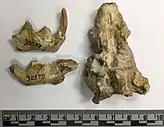 |
|
| Alligator | Crocodilia | Eocene | _-20120521-RM-224539.jpg.webp) |
||
| †Archaeocyon |
|
†Borophaginae | Oligocene | 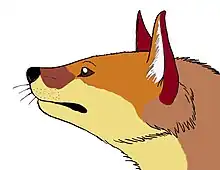 |
|
| †Archaeotherium |
|
†Entelodontidae | Oligocene | 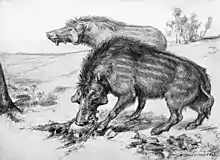 |
|
| †Bathornis |
|
†Bathornithidae | Eocene-Miocene | 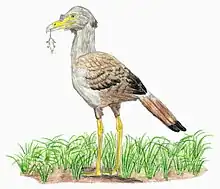 |
The type genus of the Bathornithidae, large predatory birds related to seriemas.[1] |
| †Bothriodon |
|
†Anthracotheriidae | 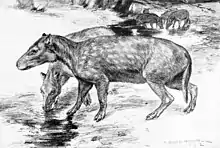 |
||
| †Daeodon |
|
†Entelodontidae | Miocene | 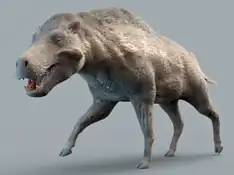 |
|
| †Daphoneus |
|
†Amphicyonidae | Eocene-Miocene |  |
|
| †Dinictis |
|
†Nimravidae | Eocene-Miocene | 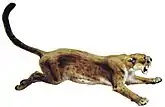 |
|
| †Eporeodon |
|
†Merycoidodontidae | Oligocene | 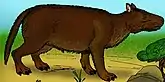 |
|
| †Hoplophoneus |
|
†Nimravidae | Eocene-Oligocene | 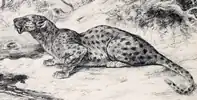 |
|
| †Hyaenodon | †Hyaenodontidae | 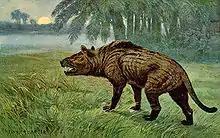 |
|||
| †Hypertragulus | †Hypertragulidae | 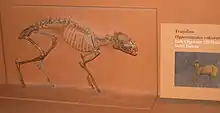 |
|||
| †Hyracodon | †Hyracodontidae | 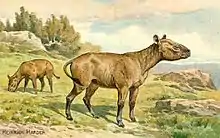 |
|||
| †Ischyromys | †Ischyromyidae | 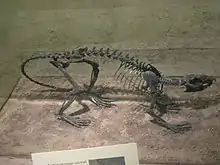 |
|||
| †Leptomeryx | †Leptomerycidae | 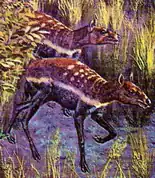 |
The most common fossil found in the area.[2] | ||
| †Leptauchenia | †Merycoidodontidae | 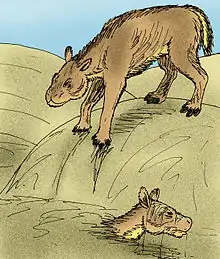 |
|||
| †Megacerops | †Brontotheriidae | 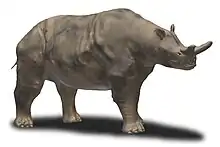 |
|||
| †Merycoidodon | †Merycoidodontidae | 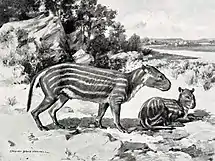 |
|||
| †Mesohippus | Equidae |  |
|||
| †Metamynodon | †Amynodontidae | 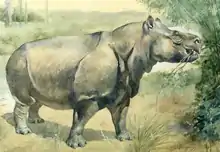 |
|||
| †Miniochoerus | †Merycoidodontidae | 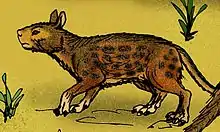 |
|||
| †Miohippus | Equidae | 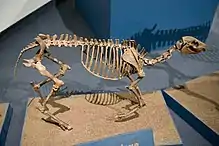 |
|||
| †Nimravus | †Nimravidae | _(Oligocene%253B_Black_Hank_Canyon%252C_Wildcat_Hills%252C_Nebraska%252C_USA)_4_(32658241572).jpg.webp) |
|||
| †Osbornodon | Canidae | ||||
| †Palaeolagus | Leporidae | 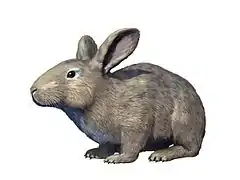 |
|||
| †Paracrax | †Bathornithidae | Closely related and similar to the conspecific Bathornis; however, it seems to have occupied more arid environments.[3] | |||
| †Parictis | †Amphicynodontinae | ||||
| †Peltosaurus | Anguidae | 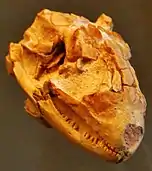 |
|||
| †Poebrotherium |
|
Camelidae | 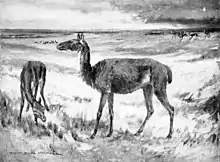 |
||
| †Protapirus | Tapiridae | 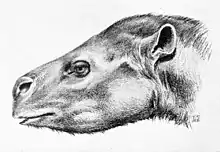 |
|||
| †Protoceras | †Protoceratidae | 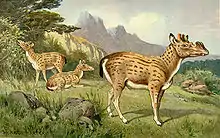 |
|||
| †Stylemys |
|
Testudinidae | 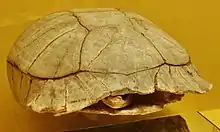 |
||
| †Subhyracodon | Rhinocerotidae | 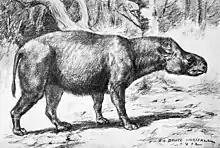 |
|||
| †Xenocranium |
|
†Epoicotheriidae | Oligocene | 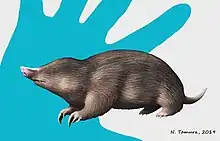 |
See also
- Category:White River Fauna
Further reading
- Rachel Benton, The White River Badlands: Geology and Paleontology, Indiana University Press 2015
- William Berryman Scott, A history of land mammals in the western hemisphere, MacMillan Publishing Company, 1913
References
- ↑ Wetmore, A. (1927). "Fossil Birds from the Oligocene of Colorado" (PDF). Proceedings of the Colorado Museum of Natural History. 7 (2): 1–14.
- ↑ Emry, Robert J. (1973). "Stratigraphy and Preliminary Biostratigraphy of the Flagstaff Rim Area, Natrona County, Wyoming". Smithsonian Contributions to Paleobiology (18): 1–43. doi:10.5479/si.00810266.18.1. ISSN 0081-0266.
- ↑ Wetmore, A. (1927). "Fossil Birds from the Oligocene of Colorado" (PDF). Proceedings of the Colorado Museum of Natural History. 7 (2): 1–14.
This article is issued from Wikipedia. The text is licensed under Creative Commons - Attribution - Sharealike. Additional terms may apply for the media files.